Service Introduction
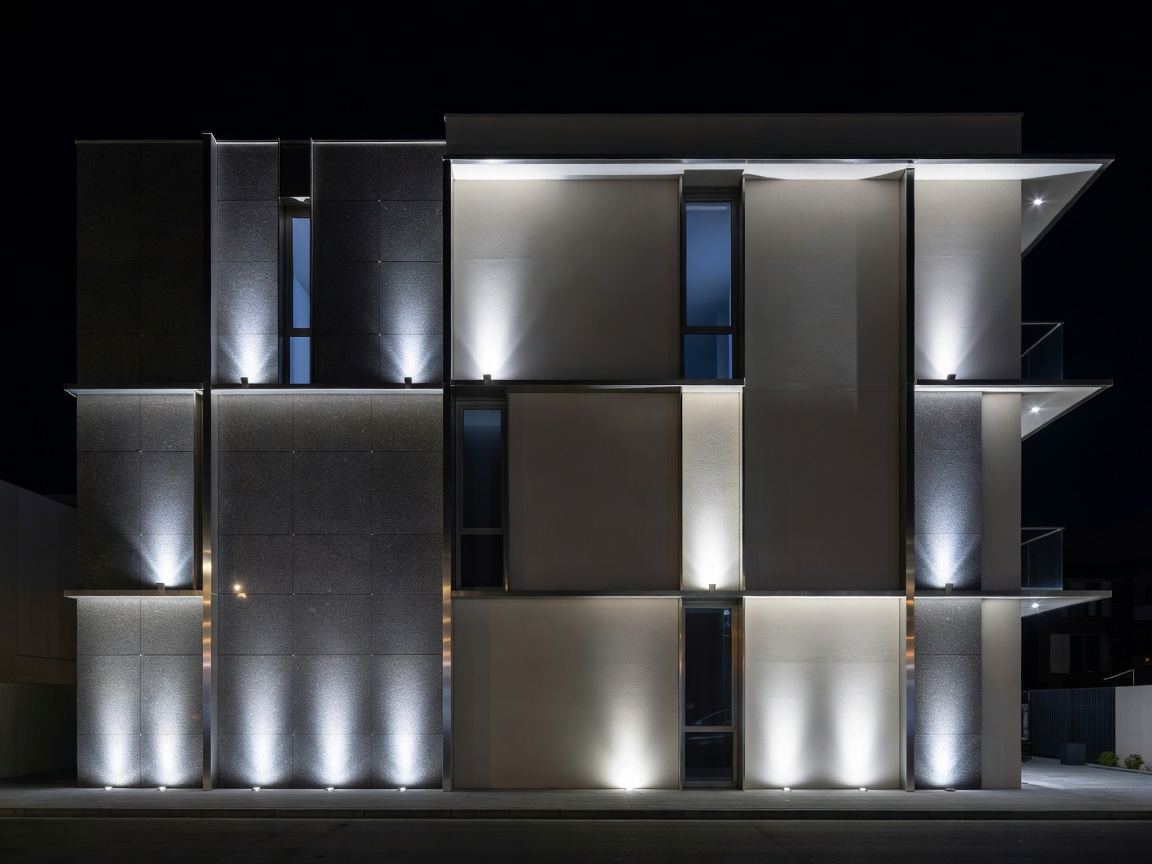
Architectural lighting is an advanced discipline focused on the building itself rather than its surroundings. The objective is to use light to reveal the character, texture, and structural lines of a property after sunset. By carefully applying light and shadow, this service enhances the presence of a building, turning flat facades into dynamic visual elements that reflect the original architectural intent.
What the Service Involves
The process requires an analysis of the building's materials, geometry, and key focal points such as columns, arches, or distinct rooflines. It involves selecting highly controllable fixtures, often with specific beam angles, to graze walls, wash surfaces, or project focused beams. Planning the mounting locations to ensure the fixtures themselves are unobtrusive is a critical component of the service.
Suitable Applications
- Textured stone, brick, or modern cladding facades.
- Structural columns, pillars, and arches.
- Overhangs, eaves, and distinct roofline details.
- Commercial building frontages and corporate headquarters.
Planning Considerations
The interplay of light and shadow is central to architectural planning. Too much light flattens a surface, while calculated shadows provide depth. Consideration must be given to windows and interior spaces; exterior architectural light must not cause uncomfortable glare for occupants inside the building.
Lighting Considerations
Beam control is essential. Narrow beams are used to highlight tall vertical elements, while wider washes are used for large, flat surfaces. The color temperature should complement the building material—warmer tones for natural stone and brick, and occasionally cooler tones for sleek, modern concrete or steel structures.
Installation Considerations
Mounting fixtures directly to architectural surfaces requires care to avoid damaging the finish or compromising weatherproofing. Cabling must be meticulously hidden within building joints, behind fascias, or routed internally where possible to maintain the building's clean aesthetic.
Maintenance Considerations
Architectural fixtures are often located at heights or in difficult-to-reach locations. Maintenance involves periodic professional access to clean lenses, check seals, and ensure that the strict alignment required for architectural grazing and spotting has not shifted.
FAQ
Grazing involves placing a light fixture close to a textured surface and aiming the beam tightly along the wall to emphasize the texture through dramatic shadows.