Service Introduction
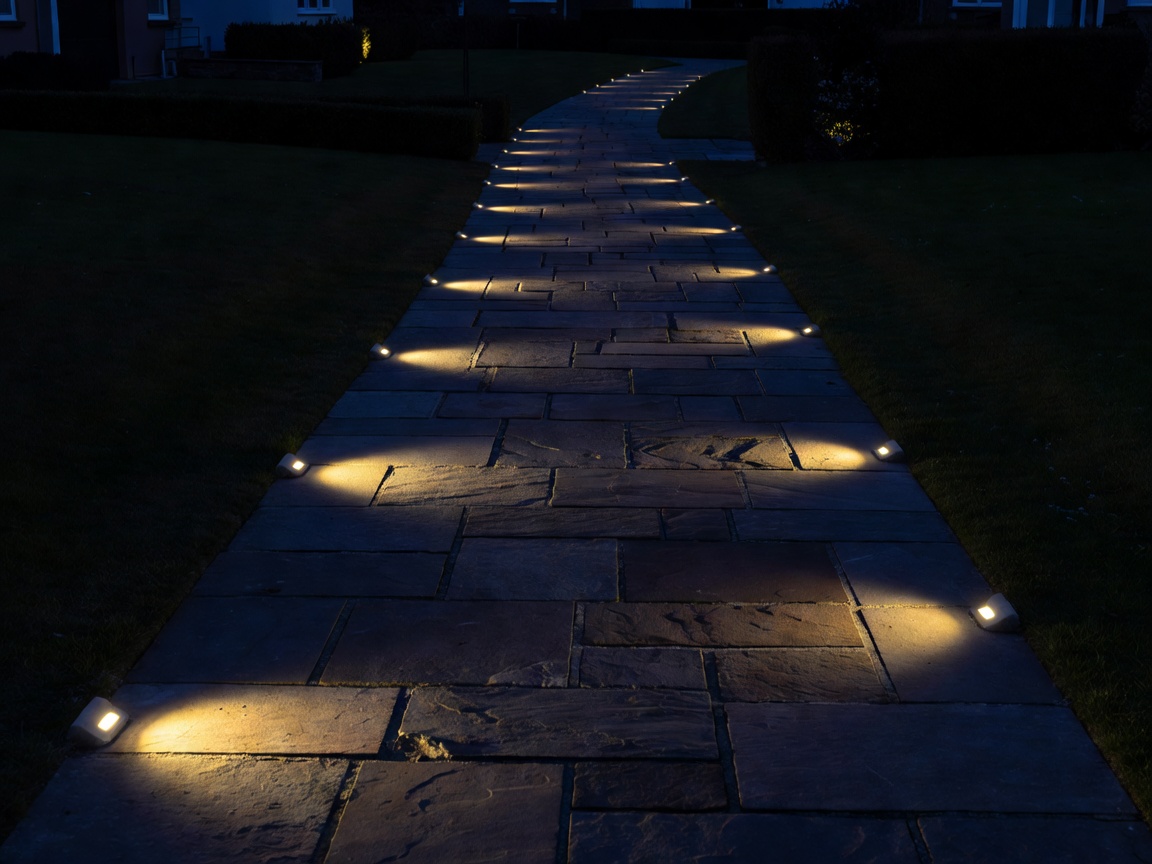
Pathway lighting is a fundamental aspect of exterior design focused on pedestrian movement. The primary objective is to make walkways, steps, and transitions clear and visible after dark. By providing structured illumination along paths, this service helps outline the intended route through an outdoor space, preventing accidental stepping into planting beds and providing a defined, welcoming approach to a building or garden destination.
What the Service Involves
This service involves assessing the length, width, and surface material of the pathway to determine appropriate fixture spacing and light spread. It includes selecting low-level fixtures, such as bollards, path lights, or recessed ground lights, that cast light downward onto the walking surface rather than up into the eyes. The process also includes planning the trenching or cabling routes alongside the path to ensure a clean, hidden infrastructure.
Suitable Applications
- Front walkways connecting the street or driveway to the main entrance.
- Garden paths meandering through planting areas.
- Side access routes alongside residential or commercial buildings.
- Public pedestrian walkways within commercial perimeters.
- Steps and slight elevation changes along a route.
Planning Considerations
A key planning consideration is the principle of alternating spacing. Fixtures should generally be staggered on either side of the path rather than lined up like an airport runway, which provides a more natural and visually appealing spread of light. The width of the path dictates the required lumen output to ensure adequate coverage across the entire walking surface without creating stark shadows.
Lighting Considerations
Pathway lighting must prioritize glare reduction. The light source itself should ideally be hidden under a cap or louver, directing the beam down. The intensity of the light should be sufficient to see the ground clearly but soft enough not to overpower the ambient night environment. Consistency in color temperature across all pathway fixtures is crucial for a unified look.
Installation Considerations
Installing along pathways often requires careful excavation to lay conduit without disturbing existing hardscaping or established plant roots. Fixtures must be securely anchored into the ground to resist accidental impact from foot traffic or lawn maintenance equipment. For pathways set in concrete or stone, surface-mounted or core-drilled recessed options are considered.
Maintenance Considerations
Because pathway lights are situated low to the ground, they are susceptible to dirt, mulch, and growing vegetation. Regular maintenance involves clearing debris away from the fixtures, trimming back adjacent plants that may block the light output, and checking that the stems or bases remain perfectly vertical and secure after heavy weather or soil settling.
FAQ
Spacing depends on the fixture's light spread and the path's width, but a general rule is to place them so the pools of light just barely touch or gently overlap, avoiding distinct dark patches between them.
Yes, recessed uplights can be used to outline a path, particularly in modern designs or where above-ground fixtures might be obtrusive, though they function differently by grazing the path edge rather than casting light downward.